How to Read Your Result
Rice Purity Test results usually appear as a score from 0 to 100. The classic formula starts at 100 and subtracts one point for each checked statement. A score of 84 means 16 items were checked. A score of 51 means 49 items were checked. That arithmetic is simple; the interpretation needs more care.
The best first step is to place the number into a broad range: very high, high, middle, low, or very low. Then check which version you took. Classic, teen-safe, couples, college, and group versions can produce different result patterns because the question mix changes.
What a Result Card Should Include
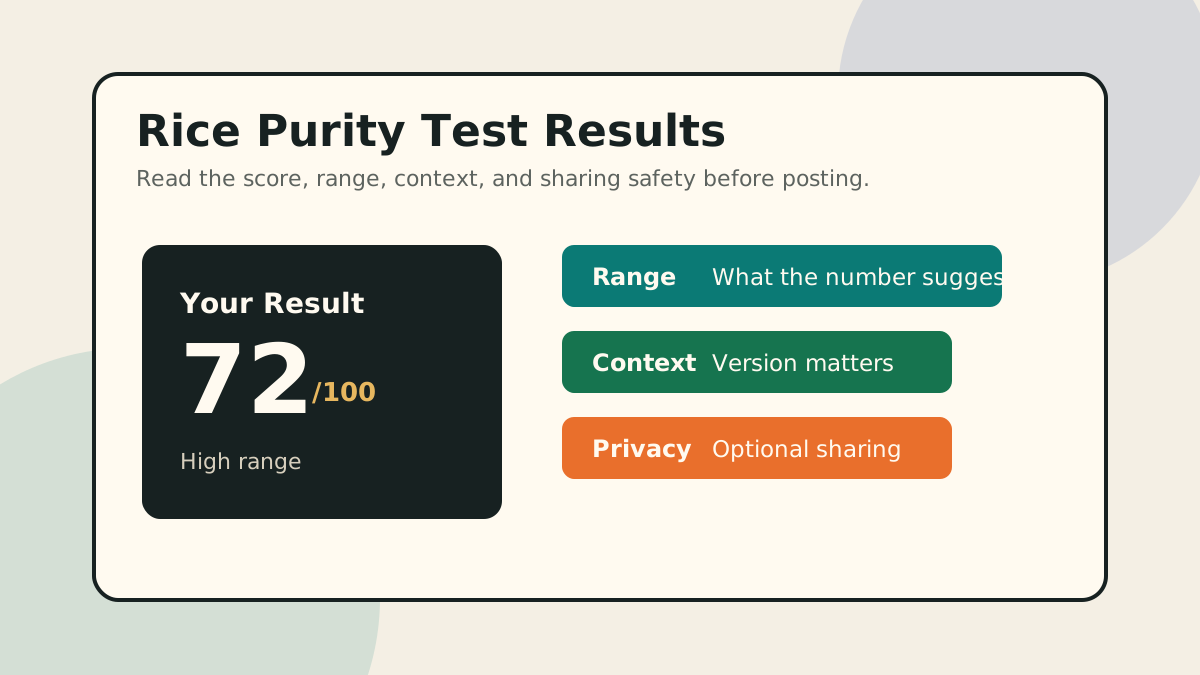
The raw number should be clear and readable. It should not reveal checked answers automatically.
A range gives quick context without pretending the number explains a whole person.
The card should name whether the user took classic, teen-safe, college, couples, or another version.
A good result card reminds users that sharing is optional and private details do not need to be posted.
Result Ranges
Use the score chart for fast range lookup. In short, 90-100 is very high, 70-89 is high, 50-69 is middle, 30-49 is low, and 0-29 is very low. Results in the same range can still come from different answers, so avoid guessing which questions someone checked.
A result can also feel different depending on age and context. A score from a teen-safe page should not be compared with an adult classic page. If age context matters, use the average score by age guide only as broad background.
Common Result Mistakes
The biggest mistake is treating Rice Purity Test results like a ranking. The score is a summary of checked statements, not a measure of character, honesty, maturity, or safety. A person with a higher score may simply have had fewer chances to encounter the prompts. A person with a lower score may have answered more literally, used a broader version, or taken the quiz at a different life stage.
Another mistake is comparing screenshots without checking version. If one result came from a teen-safe page and another came from a classic page, the numbers do not mean the same thing. Even two classic pages may differ if the wording has been modernized. Always ask which version produced the result before comparing ranges.
Retaking the quiz can also change the number. Sometimes that happens because a user understands a question differently on the second pass. Sometimes the result changes because a different mode is selected. If the score moves a few points, treat that as normal variation rather than a serious personal update.
Sharing Results Safely
Score results are often shared as screenshots or copied text. That is fine when everyone involved is comfortable. It becomes a problem when someone is pushed to explain the number, reveal checked items, or compare with a group that uses the score as pressure.
The safer share format is simple: score, range, and version. Leave out the checked answers. If a friend sends a result, respond to the number without asking for private details. The quiz should feel like entertainment, not a demand for disclosure.
Get a Private Result
Take the test in your browser, read the score range, and decide whether you want to copy or save a result card. The result is most useful when sharing stays optional.
FAQ
What do Rice Purity Test results mean?
They summarize checked statements on a 0-100 scale. Higher means fewer checked items, and lower means more checked items.
Do results show my answers?
No. A score alone does not show which questions you checked. Avoid sharing answer details unless you personally choose to.
Can two people have the same result for different reasons?
Yes. Two people can land on the same score while checking different categories, which is why result context matters.