Short Answer
There is no official average Rice Purity score by age. Any chart online should be read as an interpretation guide, not verified research. The original-style quiz was built as a social checklist, and modern versions are copied across many sites with different wording, audiences, and answer habits.
Still, age is a real context signal. A teen-safe result should not be compared with a college-focused result. A 15-year-old and a 23-year-old may answer from very different life stages, even if both take a 100-question test. This age guide is most useful when it helps you avoid unfair comparisons.
Age Range Context
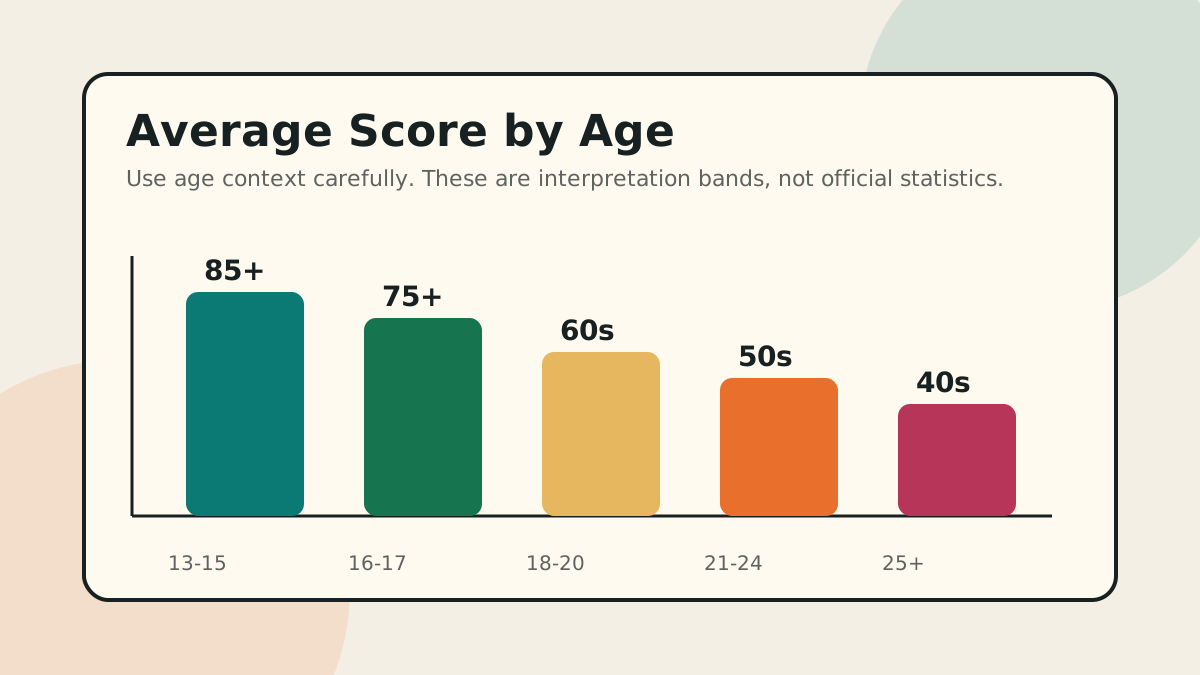
| 13-15 | Usually best served by a teen-safe version. Scores may trend high because many adult and college prompts are not appropriate context. |
|---|---|
| 16-17 | Still a teen context. Comparisons should stay broad, private, and free from pressure. |
| 18-20 | College and new-adult experiences may affect results, especially if the version includes campus or party questions. |
| 21-24 | Scores often vary widely. Relationship, social, and risk prompts can pull results in different directions. |
| 25+ | The result becomes less about age alone and more about life path, culture, privacy standards, and question interpretation. |
How to Use Age Bands
Age bands are most helpful when they explain why a comparison may be unfair. A younger user may score high because many prompts have never been relevant. A college user may score lower because the page includes dorm, party, campus, and relationship prompts that are common in that setting. An adult user may answer from a longer timeline, but that does not mean every lower score has the same story.
The better question is not "Am I normal for my age?" The better question is "Did I take the right version, and am I comfortable with how I answered?" If the page is too intense, switch to a safer version. If a question feels unclear, skip it. If the result feels too personal, keep it private. Age context should make the score easier to understand, not more stressful.
Why Age Averages Are Limited
Age-based averages are hard to verify because most scores are self-reported. People may exaggerate, skip questions, take different versions, or share only results that feel funny. A public comment thread is not a balanced sample, and a friend group is not a scientific study.
Version differences matter too. The teen-safe test removes adult and substance-heavy prompts. The college version emphasizes campus life. The couples version focuses on relationship milestones. Those versions should not be merged into one age average.
How to Compare Safely
If you compare, compare ranges instead of exact numbers. A score of 78 and a score of 82 are usually more similar than different. Also compare the same version with the same version. The average Rice Purity score context should never be used to pressure someone to explain checked answers.
A safer sequence is simple: take the anonymous test, read the score meaning guide, then use this age page only for broad context. If a number feels uncomfortable, keep it private. The quiz works best when sharing is optional.
Use Age Context After the Test
Take the quiz first, then return to this age comparison guide if you want a careful comparison that respects version, privacy, and life stage.
FAQ
What is the average Rice Purity score by age?
There is no official age average. Treat online numbers as broad estimates unless the source explains its sample and method.
Do younger users always score higher?
Not always, but younger users often have less context for many questions. Teen-safe pages are better for teen search intent.
Can adults use the same chart?
Adults can use the chart for broad context, but a result still depends more on life experience, version, and answer interpretation than age alone.