Short Answer
There is no official average Rice Purity score because the test is copied across many sites, versions, age groups, and social platforms. Many public comments and friend-group comparisons land somewhere around the middle-to-high part of the scale, but those numbers are self-selected. People who share scores online are not a balanced sample.
A practical way to think about the average Rice Purity score is to use broad bands instead of one exact number. A high school or teen-safe audience may trend higher. A college audience may trend lower. Couples and friend groups can vary widely because their version may focus on a narrower set of experiences.
Careful Benchmark Ranges
The ranges below are not official statistics. They are a cautious interpretation framework for users who want context after taking the quiz. Treat the average as a soft reference, not a target.
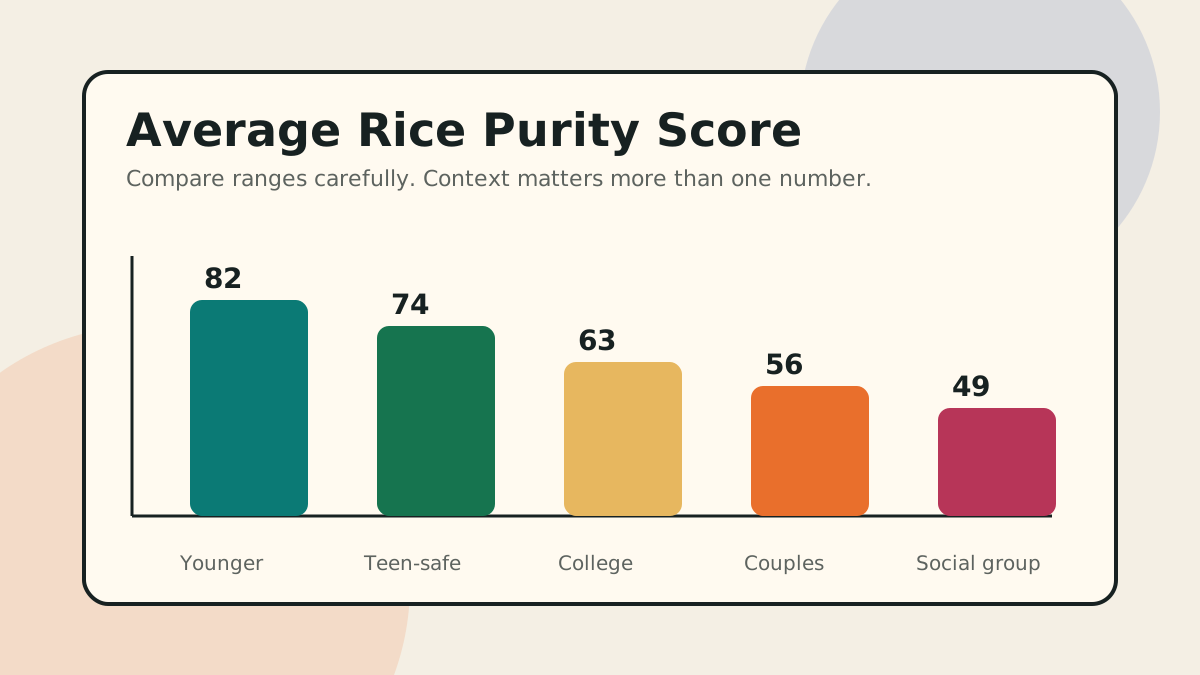
Often seen in younger, teen-safe, or low-intensity contexts. It can also appear when someone skips questions that feel too private.
A common broad comparison band for many online discussions. This is where many people expect the typical result to sit.
A lower middle range. It may show more checked experiences, but it still does not explain which categories caused the result.
A low range. It can be common in specific groups, but it should not be framed as better, worse, or more honest.
Why the Average Changes
The average changes because the audience changes. A classroom group, college dorm, couples page, TikTok comment thread, Reddit discussion, and private friend chat do not produce the same sample. Even when two groups use the same 100-question format, different people may answer with different standards for what counts.
Question wording also matters. Some pages keep the original style, some modernize the language, and some filter out adult topics. A teen-safe version may produce a higher average because it removes many lower-score prompts. A college version may produce a lower average because it emphasizes campus and social experiences.
How to Compare Your Score
If your score is above the benchmark you expected, that does not mean you are behind. If your score is below the benchmark you expected, that does not mean you are ahead. The result only reflects the statements you checked on one version of one quiz.
A better comparison method is to match the version first. Compare classic with classic, teen-safe with teen-safe, couples with couples, and college with college. Then compare ranges instead of exact numbers. A score of 73 and a score of 76 usually belong in the same broad interpretation band.
| Best comparison | Same test version, same score range, voluntary sharing, no pressure to explain answers. |
|---|---|
| Weak comparison | Different versions, different ages, public comment screenshots, or scores shared for attention. |
| Unsafe comparison | Asking someone to reveal checked answers, using the score to shame, or treating it as a character test. |
What the Average Can Tell You
The average can tell you whether your number is generally high, middle, or low compared with casual online expectations. It can also help content pages answer search intent for users who are curious after seeing a result card. It cannot tell you whether your life is normal, whether someone is trustworthy, or whether a person should explain private experiences.
If you want a clearer reading, use three pages together: the Rice Purity score chart for range placement, the score meaning guide for interpretation, and the online test for a private current result.
Find Your Own Score First
Before comparing with any average, take the anonymous test and keep your answers private unless you choose to share.
FAQ
What is the average Rice Purity score?
There is no verified official average. Treat any exact number online as an estimate unless the source explains its sample and method.
Is a score below average bad?
No. Below average only means more checked answers compared with a rough benchmark. It is not a judgment of character.
Why do average scores differ by site?
Different sites use different wording, audiences, and versions. That makes the average unstable across the web.
Should teens compare with the general average?
No. Teens should use a teen-safe version and avoid comparing with adult or college-focused averages.