What People Mean by Original
When people search for the original Rice Purity Test, they usually mean the classic 100-question purity checklist rather than a short parody, a couples-only version, or a modern social media variant. The familiar structure is simple: read the statements, check what applies, and receive a score from 100 down to 0.
The word "original" can be tricky because many sites reproduce similar question lists. This page does not claim official ownership or affiliation. It explains the classic format and links to a modern, private version built for mobile users.
Classic Scoring
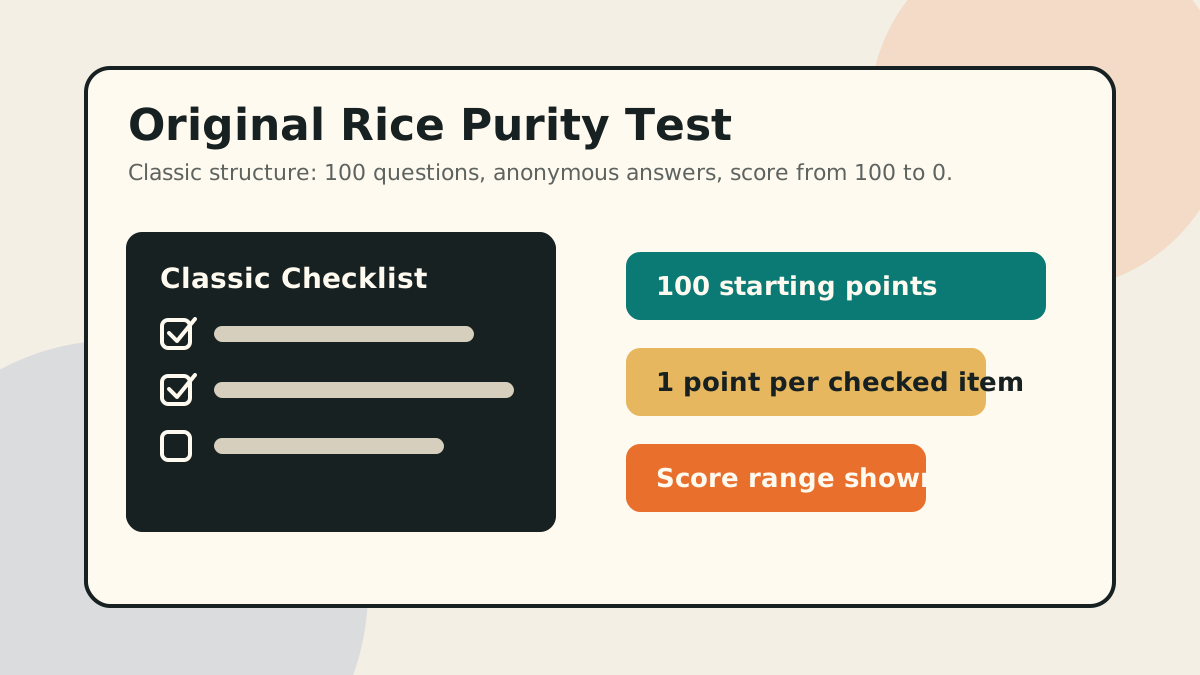
The classic score starts at 100. On a 100-question version, each checked statement usually subtracts one point. If 20 statements apply, the score becomes 80. If 55 statements apply, the score becomes 45. This is why the classic format feels easy to share: the result is one clear number.
That clarity is also the weakness. A single score hides which categories were checked. Social, relationship, college, risk, and adult prompts may all affect the same result. A score can summarize the quiz, but it cannot explain a whole person.
Modern Differences
A modern page should be easy to answer on a phone, with progress, readable labels, and stable controls.
Users should know whether answers stay local, whether a login is required, and whether sharing is optional.
Teen-safe, couples, college, and group modes answer different search intents without forcing one list on everyone.
Modern users often want a result image, but the card should show the score without exposing checked answers.
Original vs. Modern Pages
A strong modern page should respect the original Rice Purity Test structure without copying blindly. The classic format is useful because it is simple, searchable, and easy to explain. Modern pages can improve the experience by making the list easier to scan, keeping answers private, adding result context, and offering safer versions for users who should not see adult prompts.
The line to avoid is pretending that every variation is official. A page can be useful without making that claim. It should say what version it offers, how the score is calculated, whether answers are stored, and how its wording differs from a classic list. That transparency helps users trust the page and helps search engines understand why the page exists.
For users, the practical difference is control. A classic-style page should let you answer quickly, reset easily, and leave without an account. A modern page can add navigation, score ranges, and share cards, but it should not make the quiz feel heavier than the checklist people came to take.
Which Version Should You Take?
Choose the classic broad checklist if you want the familiar structure. Choose the teen-safe version if adult topics are not appropriate. Choose the college version if campus context is the main reason you are searching. Choose the couples version if you want relationship-focused prompts.
If your goal is only to understand a number, start with the score chart or results guide. If your goal is to see the full list topic structure, read the questions guide first.
Take a Classic-Style Test
Use the homepage for a classic 100-question experience with optional modes, local scoring, and a result card. The classic 100-question idea stays recognizable, while the interface is built for current searchers.
FAQ
What is the original Rice Purity Test?
The classic version is commonly understood as a 100-question checklist that scores checked experiences from 100 down to 0.
Is this the official Rice University test?
No. This site is independent and is not affiliated with Rice University. It provides an entertainment quiz and explanatory guides.
Are modern versions worse than the original?
No. Modern versions can be more readable, safer, and more private if they preserve clear scoring and explain differences honestly.